Blockchain for Enhanced Cybersecurity
As technology advances, so does the complexity and severity of cyber threats. From phishing attacks to sophisticated ransomware schemes,…
Read article →
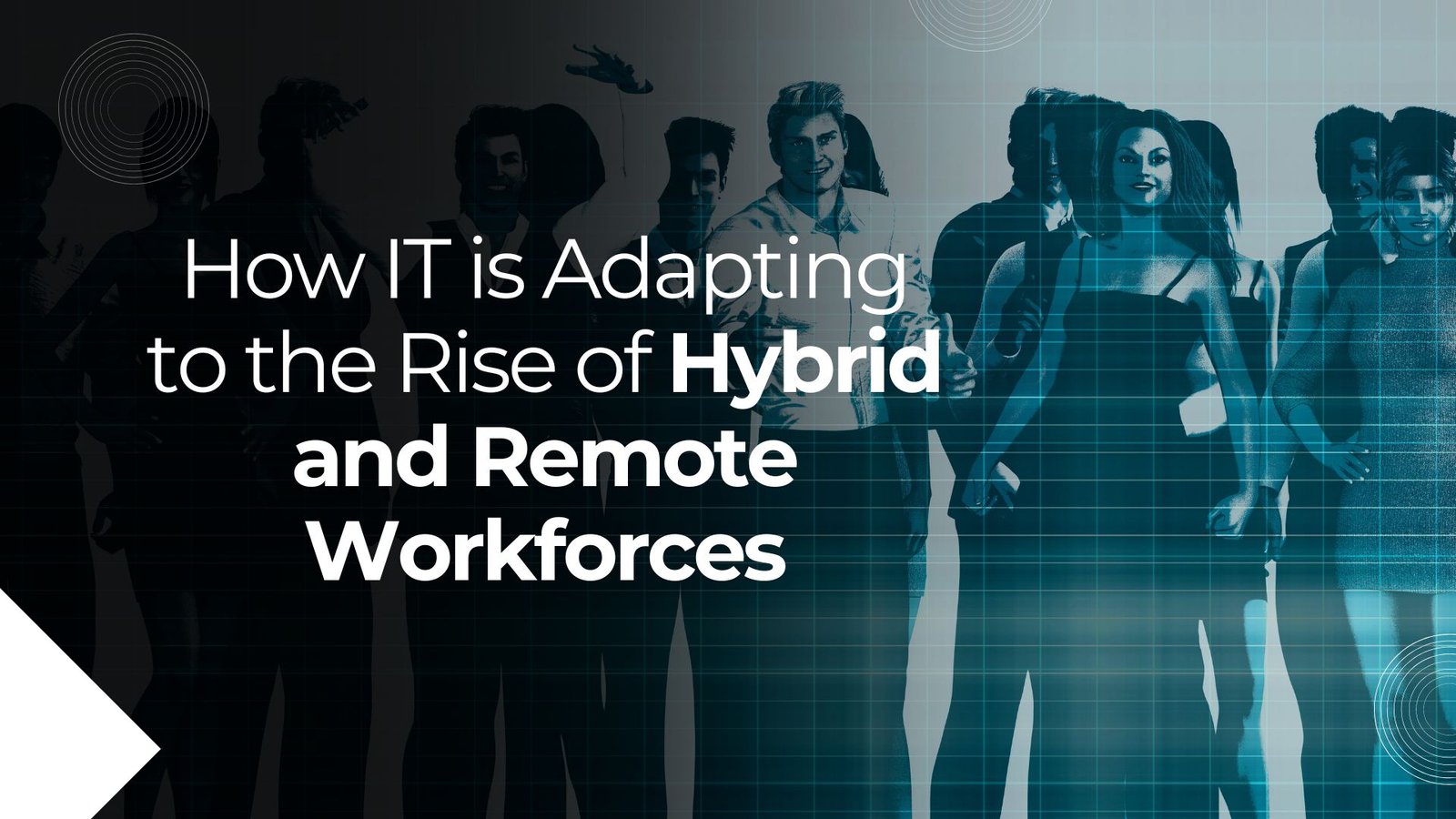
The global shift to hybrid and remote workforces has revolutionized the way businesses operate. As companies embrace these flexible work models, IT departments are at the forefront of enabling seamless transitions and maintaining productivity. Here’s how IT is adapting to the challenges and opportunities presented by the rise of hybrid and remote workforces.
With employees working from various locations, often using personal devices and home networks, cybersecurity has become a top priority. IT departments are implementing robust security protocols, including multi-factor authentication (MFA), virtual private networks (VPNs), and endpoint security solutions. Regular security training for employees is also essential to minimize risks such as phishing attacks and data breaches.
The adoption of cloud technology has skyrocketed in response to the hybrid and remote work trend. Cloud-based applications and storage solutions allow employees to access company resources from anywhere, fostering collaboration and efficiency. IT teams are optimizing cloud infrastructure to ensure scalability, reliability, and security, enabling businesses to operate smoothly regardless of their workforce’s location.
To bridge the gap between in-office and remote employees, IT departments are deploying advanced collaboration tools. Video conferencing platforms, instant messaging apps, and project management software have become integral to maintaining communication and teamwork. IT is responsible for selecting, integrating, and supporting these tools, ensuring they meet the diverse needs of a hybrid workforce.
Supporting a geographically dispersed workforce requires a shift in IT support strategies. Remote monitoring and management (RMM) tools have become essential for IT teams to provide real-time assistance, troubleshoot issues, and maintain system performance across various locations. Additionally, IT helpdesks are adapting by offering extended hours and remote support to accommodate employees in different time zones.
As businesses operate across multiple locations, ensuring compliance with data protection regulations has become more complex. IT departments are tasked with implementing policies and technologies that safeguard sensitive information while adhering to legal requirements. This includes data encryption, regular audits, and compliance management software that tracks and enforces regulatory standards.
A reliable and fast network is crucial for hybrid and remote work. IT teams are upgrading network infrastructure to support increased demand for bandwidth and ensure connectivity for remote employees. This includes deploying software-defined wide area networks (SD-WAN) that optimize traffic flow and improve performance for remote access.
The traditional perimeter-based security model is no longer sufficient in a hybrid work environment. IT departments are increasingly adopting a Zero Trust architecture, where no user or device is trusted by default, even if they are within the network. This approach requires continuous verification of identity and access rights, ensuring that only authorized users can access critical resources.
The rise of hybrid and remote workforces has accelerated digital transformation initiatives. IT departments are leading the charge by integrating new technologies and automating processes to enhance efficiency and innovation. From AI-powered analytics to robotic process automation (RPA), IT is driving the adoption of digital tools that enable businesses to thrive in a remote-first world.
IT’s role extends beyond technology; it also encompasses supporting employee well-being. By providing tools that enable work-life balance, such as flexible working hours and wellness apps, IT can contribute to a healthier, more engaged workforce. Additionally, IT departments are working to create ergonomic and user-friendly digital environments that reduce the risk of burnout and enhance overall job satisfaction.
The rise of hybrid and remote workforces presents both challenges and opportunities for IT departments. By strengthening cybersecurity, leveraging cloud technology, enhancing collaboration tools, and adopting innovative strategies, IT is enabling businesses to adapt to this new era of work. As the landscape continues to evolve, IT will remain a critical enabler of success in a hybrid and remote-first world.
Keep reading
 Cyber Security
As technology advances, so does the complexity and severity of cyber threats. From phishing attacks to sophisticated ransomware schemes,…
Read article → AI
AILearning a programming language can be an exciting yet daunting task, especially with the multitude of languages available today.…
Read article → Mobile App
In today's digital landscape, mobile applications are integral to our daily lives, facilitating everything from communication to banking.…
Read article →Our team sets up and supports IT, networks, security, AI and software for growing businesses.